How much does wall mural painting cost in Belgium?
An average person who decides to order a wall mural inevitably wonders about the cost and starts thinking about how to choose the right artist without making a mistake.
How much does wall mural painting cost in Belgium?
An average person who decides to order a wall mural inevitably wonders about the cost and starts thinking about how to choose the right artist without making a mistake.
What determines the cost of wall mural painting, and can you save on it? I will explain this in this article.
What is the minimum cost of a wall mural? There are several factors that significantly influence the final price.

How much does wall mural painting cost in Belgium?
The cost of wall mural painting in Belgium is determined by the complexity of the project, the level of detail, and the amount of work.
Unlike some other markets, the price here reflects not only the painting itself, but also the artist’s professional experience, the quality of materials, and the time required to create the work.
On average, the market can be broken down into the following ranges:
— Simple designs (graphic elements, minimalism, lettering) — from €50 / m²
— Medium complexity works (compositions, multiple elements, color gradients) — €150 to €300 / m²
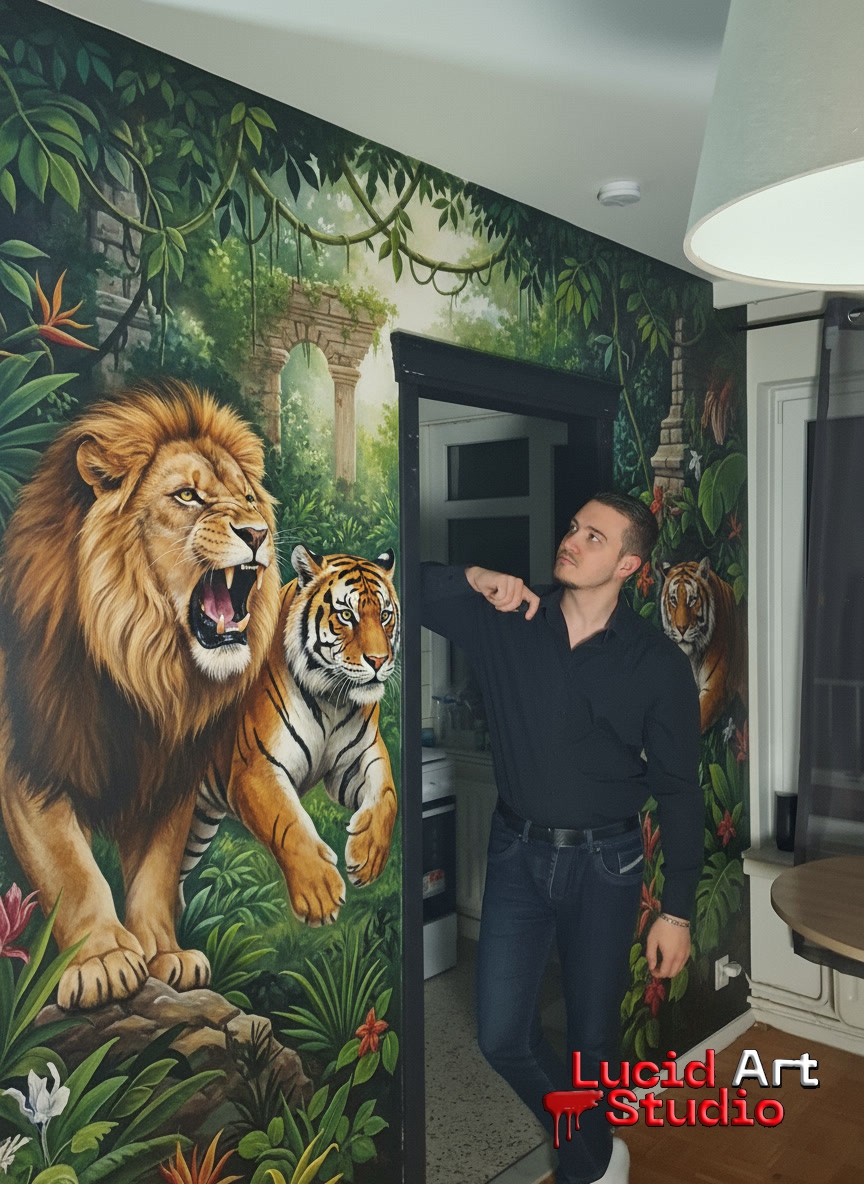
— Complex works (realism, high detail, artistic scenes) — €300 to €800 / m²
— Large-scale murals and high-end projects — €500 to €2000 / m²
— Простые рисунки (графика, минимализм, надписи) — от 50 € / м²
— Работы средней сложности (композиции, несколько элементов, цветовые переходы) — от 150 до 300 € / м²
— Сложные работы (реализм, высокая детализация, художественные сцены) — от 300 до 800 € / м²
— Монументальная живопись и проекты высокого уровня — от 500 до 2000 € / м²

Example of a simple mural

Example of a medium-level mural

Example of a high-level mural

Example of a monumental-level mural
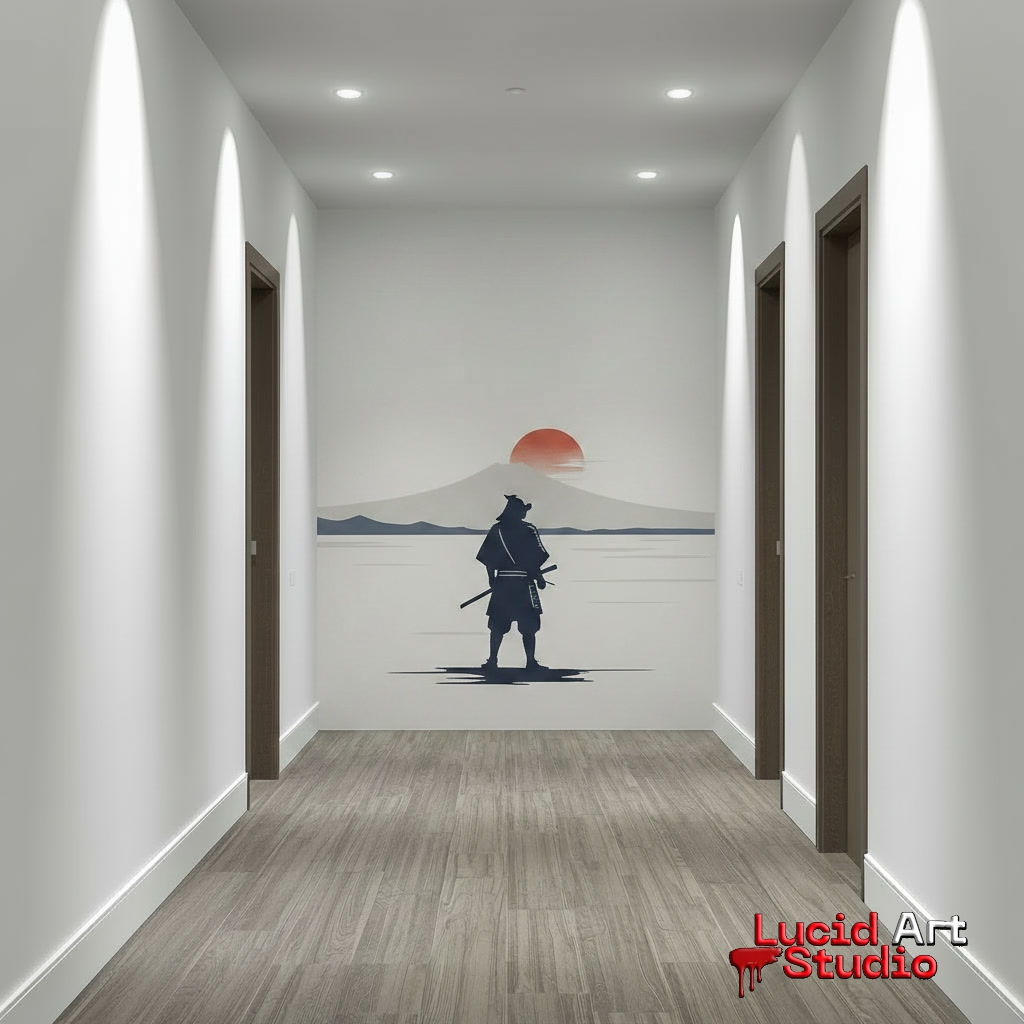
Example of a simple mural

Example of a medium-level mural
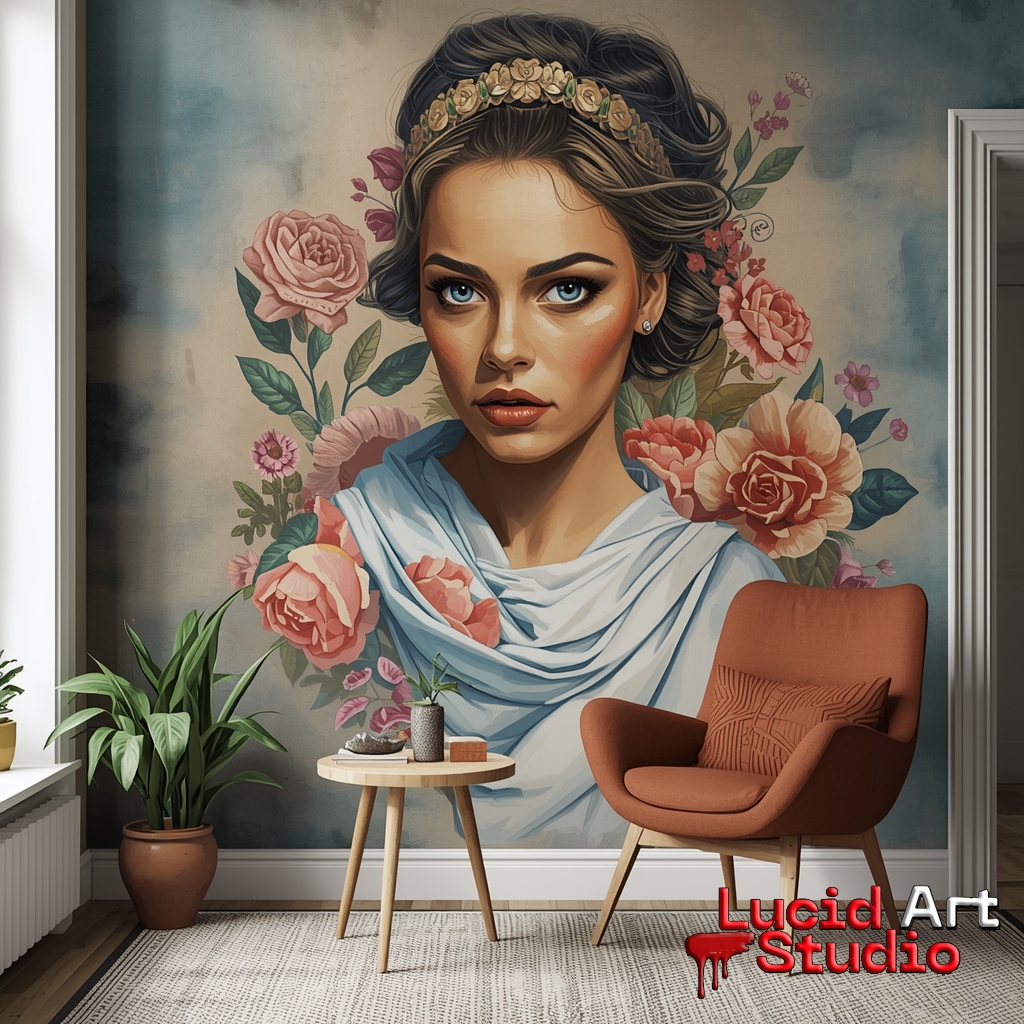
Example of a high-level mural

Example of a monumental-level mural
What does the final cost depend on?
The price of wall mural painting is calculated individually and depends on several key factors:
- Mural surface area 📐
The larger the surface, the greater the overall scope of work. - Artistic complexity 🎨
The level of detail, number of elements, color transitions, and overall refinement directly impact the price. - Surface type and materials 🧱
Different surfaces (painted walls, plaster, wallpaper, metal, furniture, etc.) require specific materials and techniques.
Work on metal, technical surfaces, and furniture is typically the most labor-intensive. - Surface preparation 🧼
A properly prepared wall significantly simplifies the process.
Unprepared or unusual surfaces require additional preparation before painting. - Working conditions 🏗️
Height, accessibility, and the need for scaffolding or specialized equipment may affect the price. - Project timeline ⏱️
Urgent orders and night work are charged at a higher rate. - Project location 📍
For distant locations, transportation and, if necessary, travel expenses are taken into account.
Small note
In Europe, mural painting is not always priced strictly per square meter.
It is often based on:
---or the artist’s daily rate
This allows for a more accurate consideration of each project’s specifics and ensures a high-quality result.
Is it possible to reduce the cost?
It is possible to reduce the budget, but it is important to understand how this may affect the quality and final result.
On the mural painting market in Europe, several categories of artists can be identified:
Beginner artists
Often offer the lowest prices — typically starting from €50–120 / m².
These are usually artists with limited experience who are building their portfolio. Quality may vary.
Mid-level artists
They have completed projects and a solid understanding of materials and workflow.
Pricing typically starts around €120–150 / m² and averages between €150–300 / m².
In this segment, you can expect a consistent and reliable quality of work.
High-level professionals
They work on more complex and large-scale projects, with a strong portfolio and proven experience.
Their pricing starts from €300 / m² and can reach €800 / m² or more, depending on the complexity and level of the project.
Important⚠️
Choosing the cheapest option is not always justified.
In practice, it may lead to revisions or a complete redo, ultimately increasing the overall cost.
💡 Mural painting is a long-term investment, so it’s wiser to consider not only the price, but also the quality and experience of the artist.
How to save money ?
— choose a less detailed style
— reduce the mural area
— simplify the composition
— prepare the surface in advance
It is important to understand that a high-quality mural is an investment in your personal space.
It is created to last for years and directly influences the atmosphere of an interior or the perception of a business.
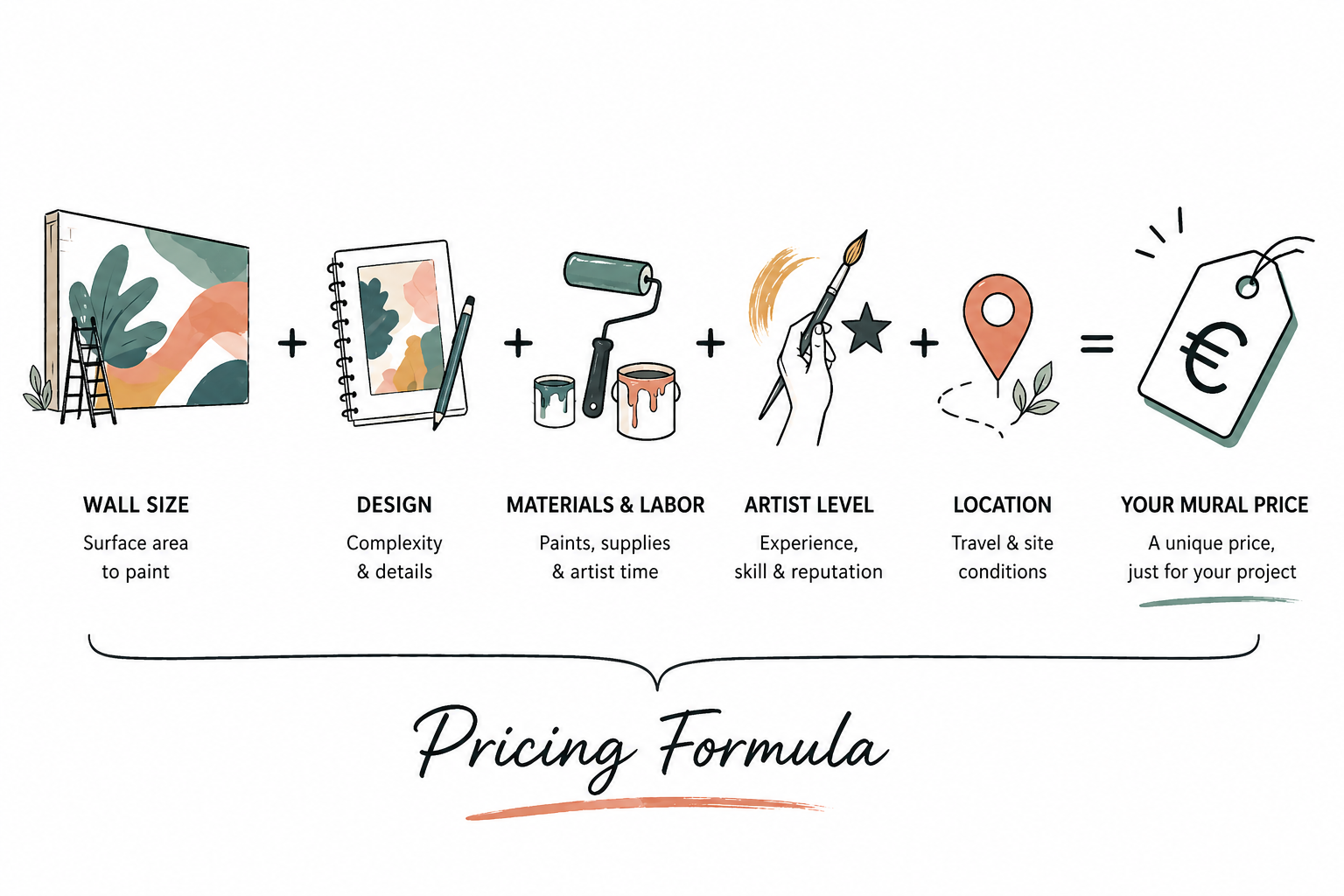
Pricing formula
Works volume
The scale and nature of a project have a significant impact on the final cost of a mural.
The price is not always calculated simply by multiplying the rate per square meter by the total area.
For example, a small, highly detailed piece can be significantly more expensive per square meter than a larger, simpler composition.
This is because the key factor is not just the surface area, but the time required and the complexity of execution.
That is why each project is evaluated individually — based on the workload, level of detail, and overall scope.
The most accurate way to determine the price is to provide a sketch or a description of the desired result and receive a tailored estimate for your specific project.
Surface characteristics
The type and condition of the surface play a crucial role in the painting process and directly influence what can be achieved.
Perfectly smooth walls allow for a high level of detail, clean lines, and precise transitions.
However, in practice, more complex surfaces are often encountered, such as textured facades or walls covered with relief wallpaper.
On such surfaces, fine details and perfectly sharp lines are limited.
In these cases, larger shapes, simplified elements, and compositions adapted to the surface are preferred.
A well-considered approach that takes the surface into account allows the artwork to remain expressive while ensuring a high-quality result in any conditions.
Application method
The choice of technique directly impacts both the cost and the final result of the project.
Depending on the objective, different methods can be used: stencil painting, monochrome solutions, hand-painted acrylic work with brushes, airbrushing, or mixed techniques.
Each of these approaches has its own advantages.
For example, stencil painting is ideal for logos and text elements, where clean lines, sharp edges, and accurate reproduction of the original design are essential.

Experience and professional level
The cost also depends on the artist’s level of training and experience. Professionals with an academic art background and a well-developed portfolio typically charge higher rates — reflecting their technical skill, understanding of composition, and ability to execute complex projects.
Beginner artists, students, or self-taught individuals may offer more affordable pricing. However, the level of execution and predictability of the final result can vary.
Ultimately, the choice depends on your goals: for simpler solutions, more basic options may be sufficient, while for complex and visually impactful projects, it is important to rely on proven experience and professional expertise.
The final project cost is determined individually and depends on a combination of factors: the scope of work, the level of complexity, and the execution conditions.
What is the cost of a sketch? What does a free sketch means ?
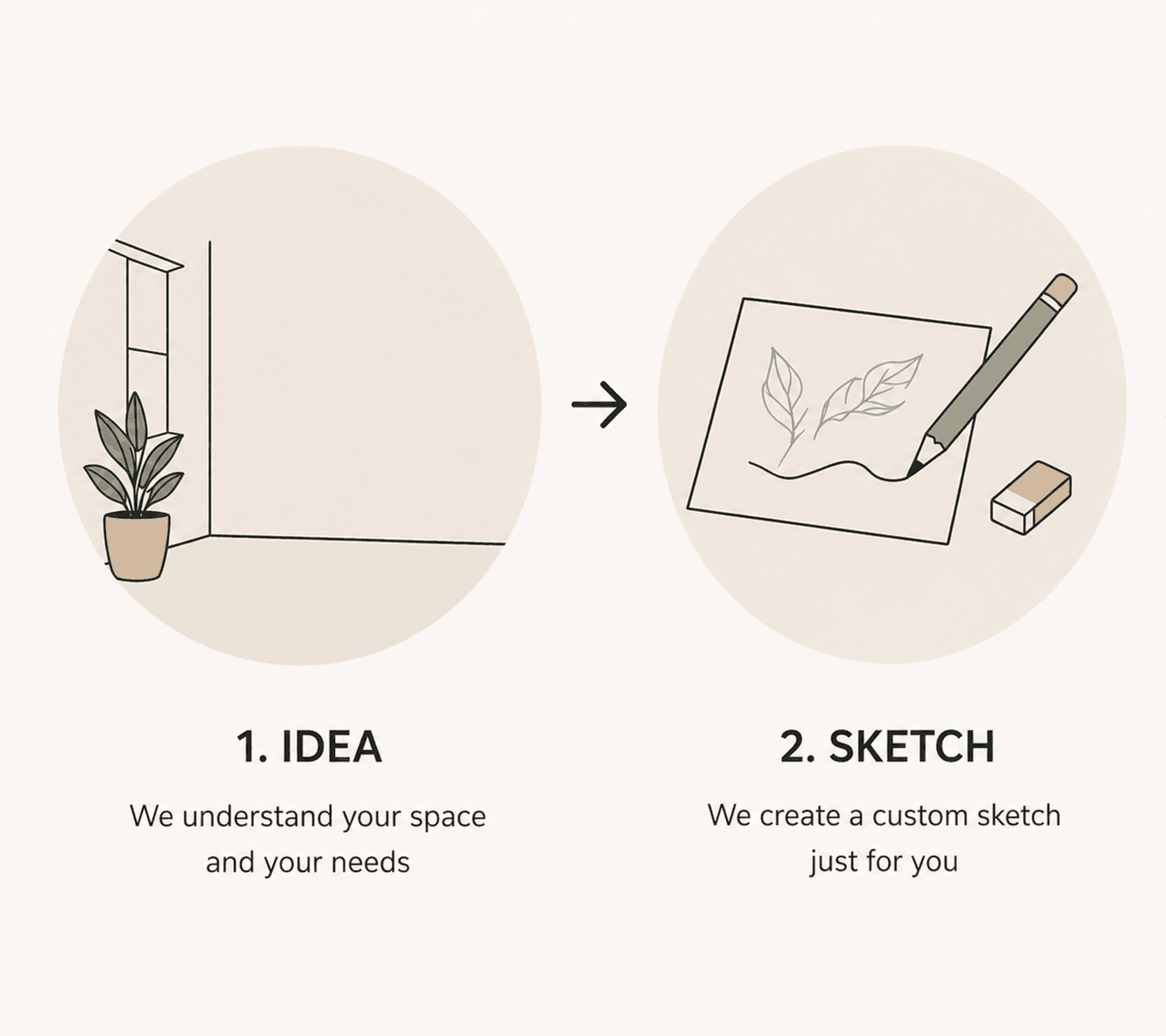
You may often come across the term “free sketch or visualization.” It is important to understand that, in most cases, this does not refer to a fully original concept created from scratch, but rather to a visualization — meaning the selection and adaptation of existing images (photos, references, visuals) to fit your space. Sometimes, several variants may be provided.
Creating a unique sketch from scratch, however, is a complete creative process that requires time and experience. This is why professional artists typically do not offer such sketches for free and do not provide an unlimited number of variations for approval.
How it works with me
Custom sketch development or the selection of unique design solutions starts from €50.
However:
- This amount is later deducted from the total cost if you proceed with the project.
- It effectively becomes part of the project deposit.
- As an alternative, I can offer free visualizations based on existing references.
Why it's important
This approach ensures:
- focus on genuinely interested clients
- devote maximum attention to each project
- ensure high-quality concept development
In practice, many quote requests are made “for the future” and do not always lead to execution. A small upfront payment for the sketch helps confirm serious intent and allows the project to start more efficiently.
Space branding
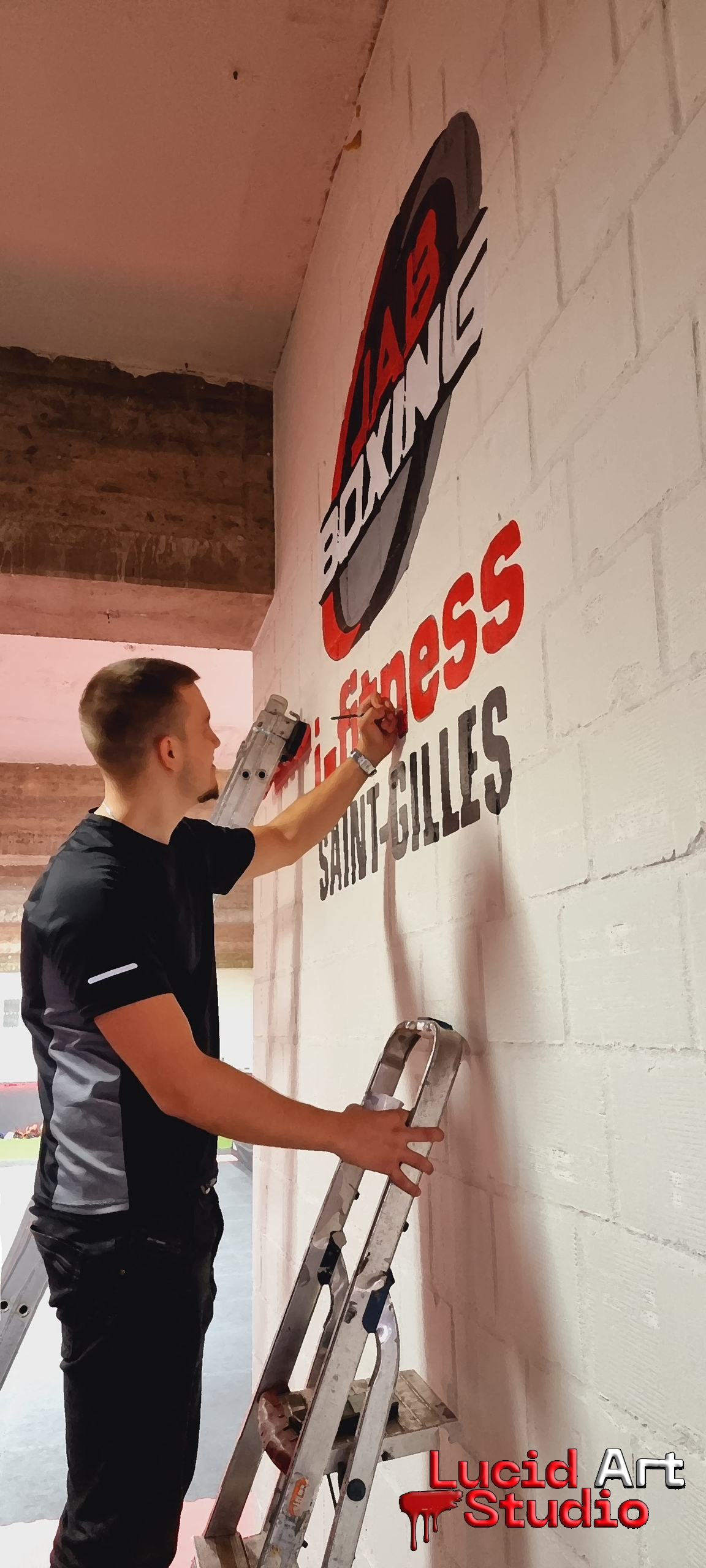
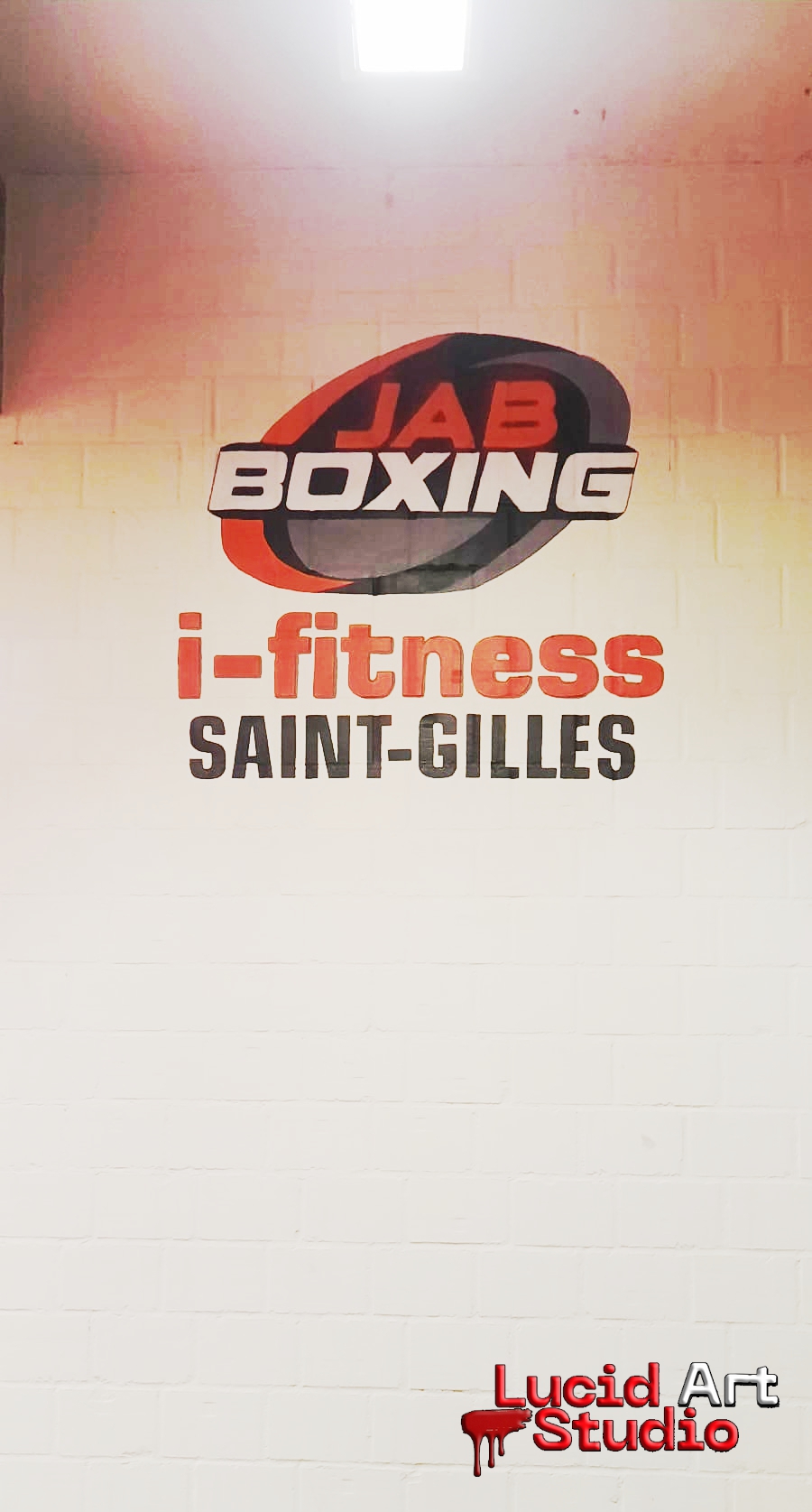
Interior design through mural painting is an effective tool for visual brand identity. Stencil-based solutions allow for the quick and precise application of logos or brand elements onto walls, furniture, and other surfaces.
This approach is widely used in offices, beauty salons, restaurants, and other commercial spaces. It helps create a recognizable atmosphere without the need for costly installations.
The result is a clean and cohesive design that supports your brand and enhances the overall perception of the space.
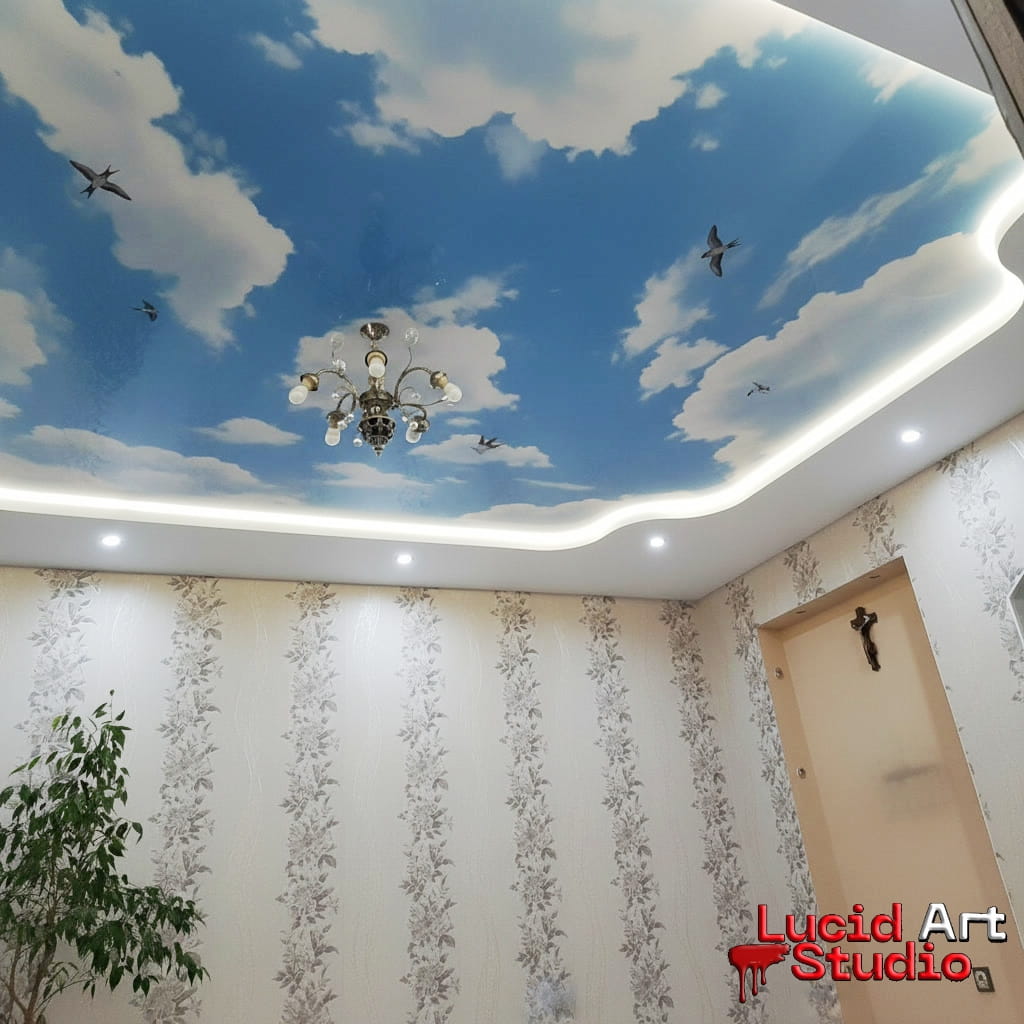
Celing painting price
Ceiling painting is typically priced higher than wall work. This is due to the increased physical difficulty of working on horizontal surfaces: it requires constant work at height, as well as the use of ladders or scaffolding. As a result, execution is slower and project timelines are longer.
Prices for this type of work generally start from €200 / m² and are calculated individually depending on the complexity of the project and the working conditions.
Additional preparation work should also be taken into account:
- protection of walls and floors using protective films
- moving or removing furniture
- setting up a safe working environment
All these factors increase the overall scope of work and affect the final cost.
Airbrush mural prices
Airbrushing is generally more expensive than traditional mural painting. This is due to the use of additional materials, stencils, specialized equipment, and increased execution time. On larger surfaces, paint consumption also rises significantly, which affects the overall cost.
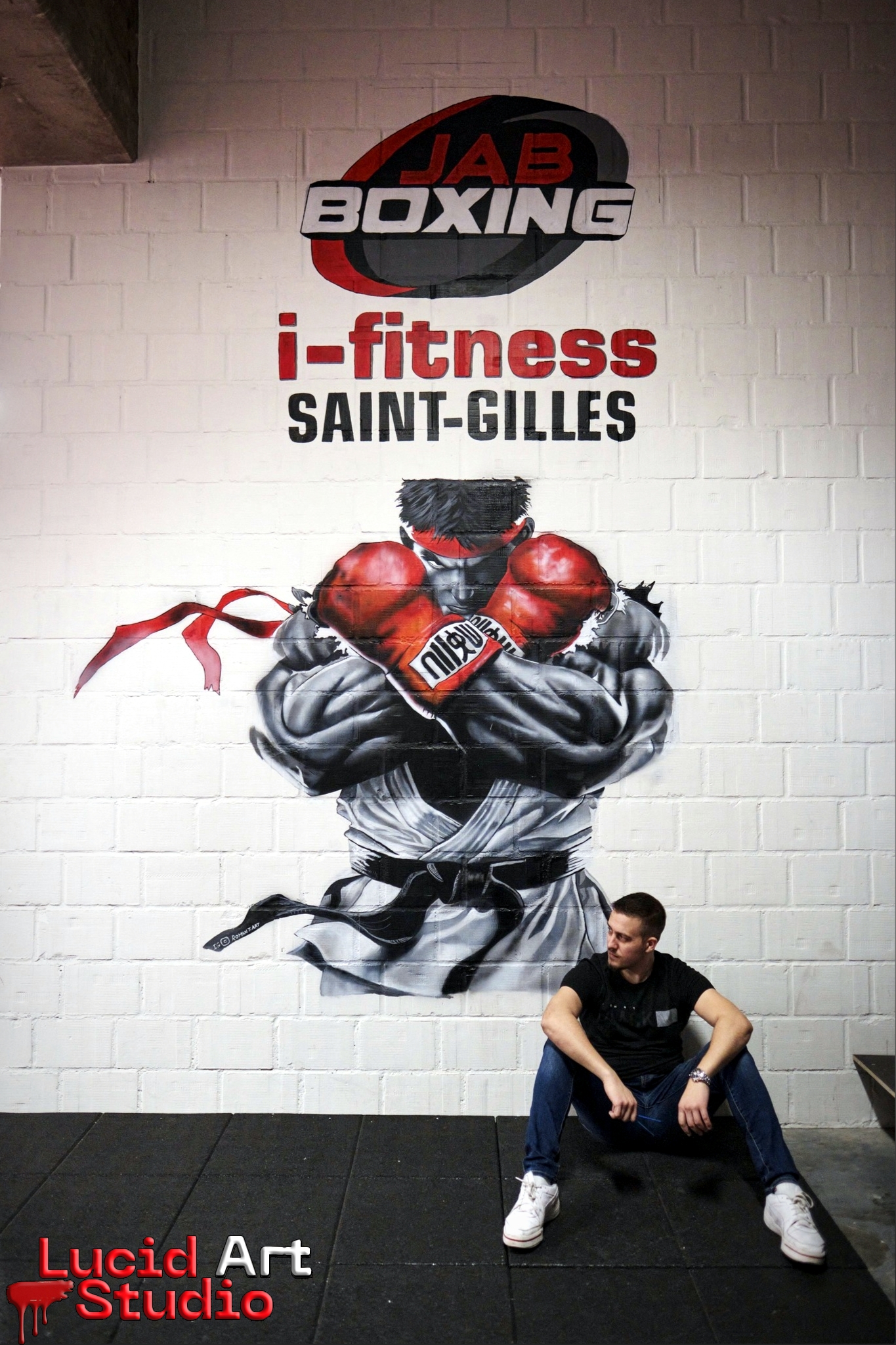
In my work, the airbrush is mainly used for backgrounds, skies, and soft color transitions. The main elements and details are executed by hand with brushes, allowing for a higher level of artistic quality.
Preparation of the space requires more time, as furniture and surfaces must be carefully protected from paint overspray. For larger projects, the use of a respirator and additional equipment is necessary.
On average, this type of work is about 20–30% more expensive than traditional wall painting.
In most cases, I use a mixed technique — combining airbrushing and hand painting. This approach speeds up the process without compromising quality and results in a more visually striking outcome.
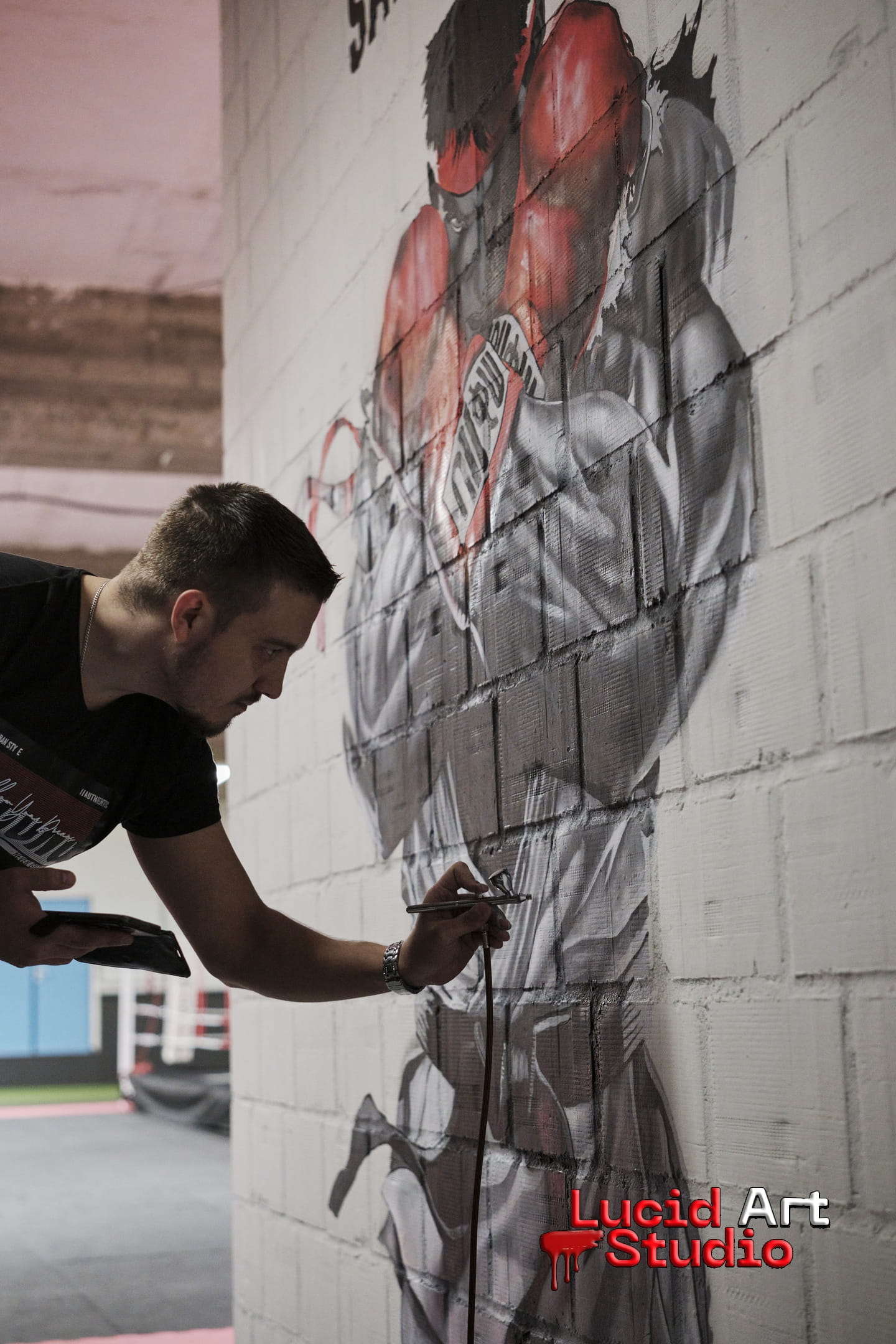
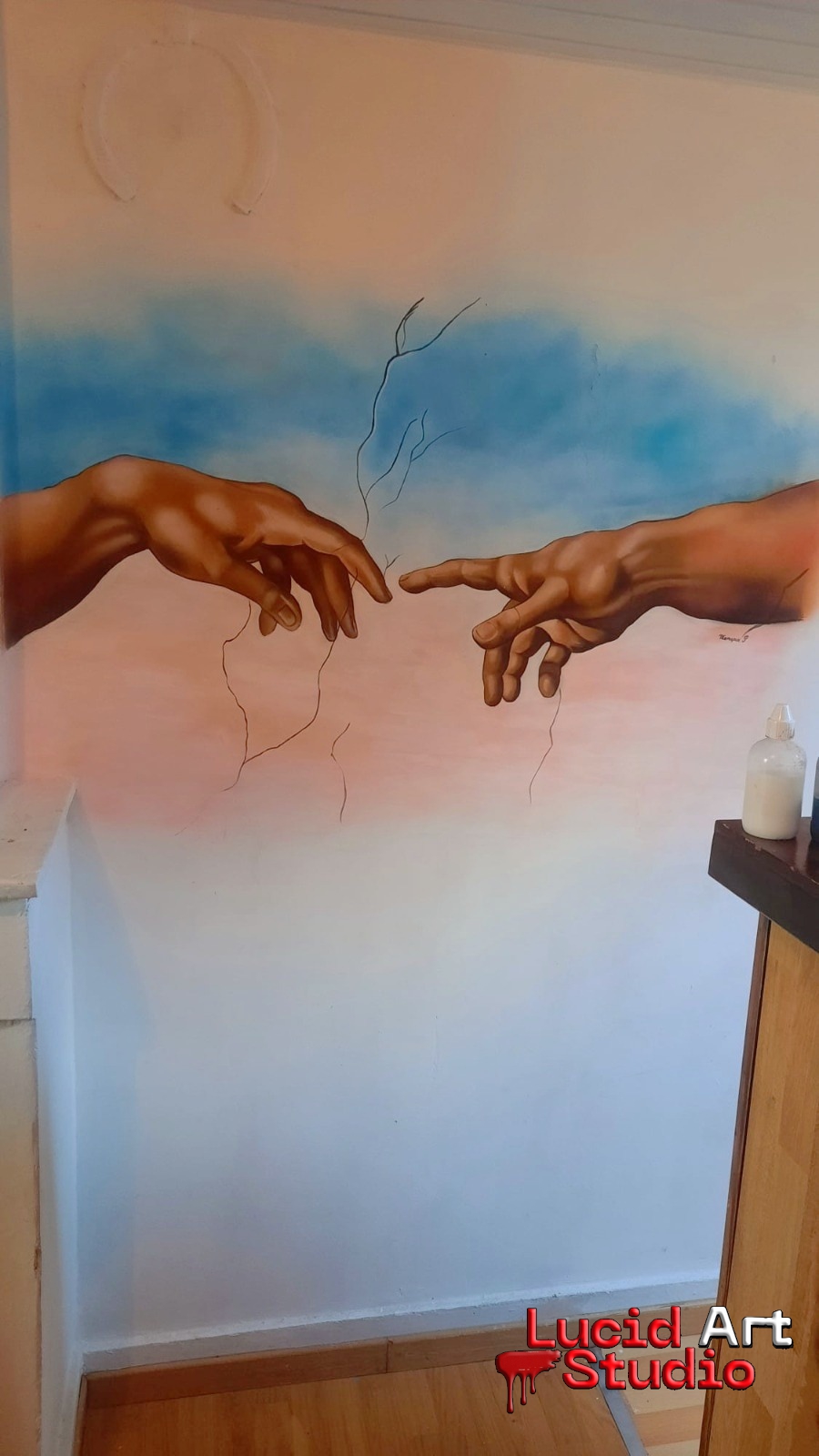
Examples of work created using airbrush and brushes
Примеры работ выполненых мной аэрографом и кистями
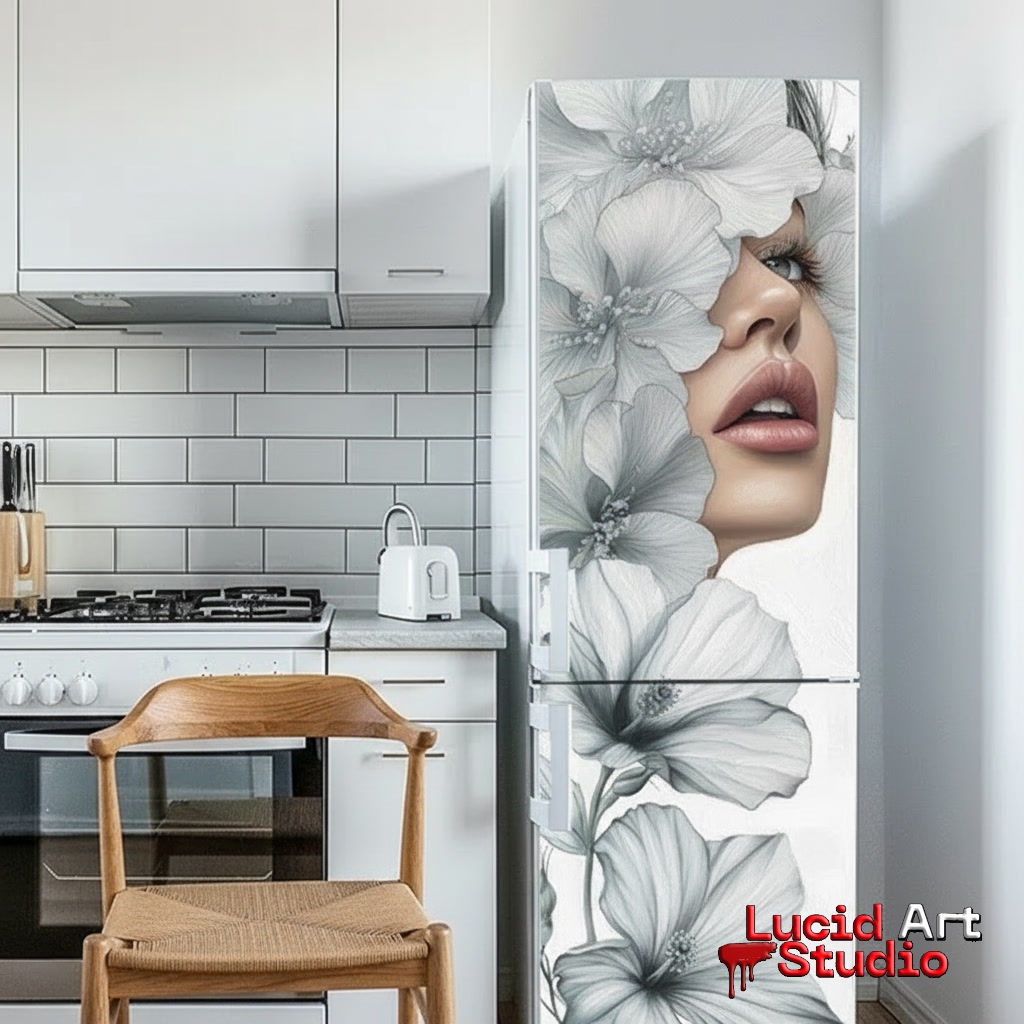
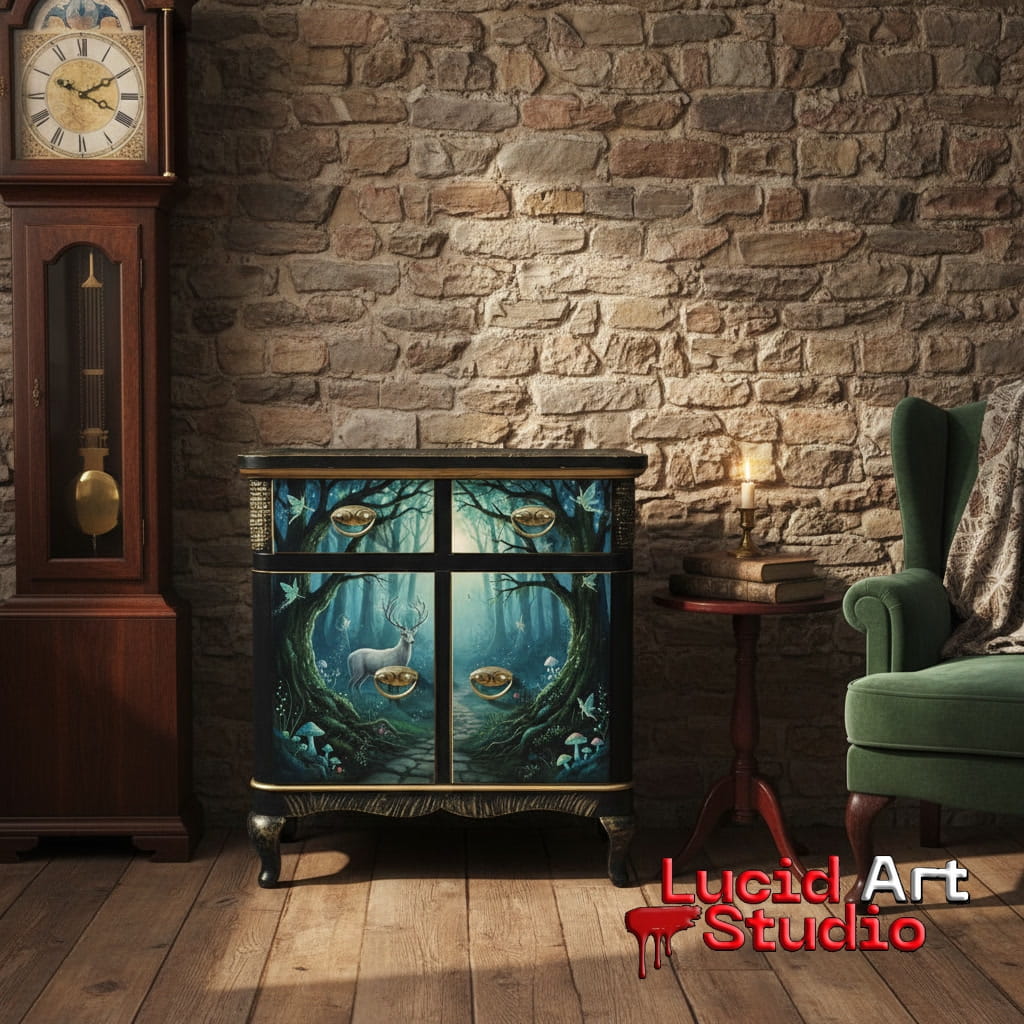
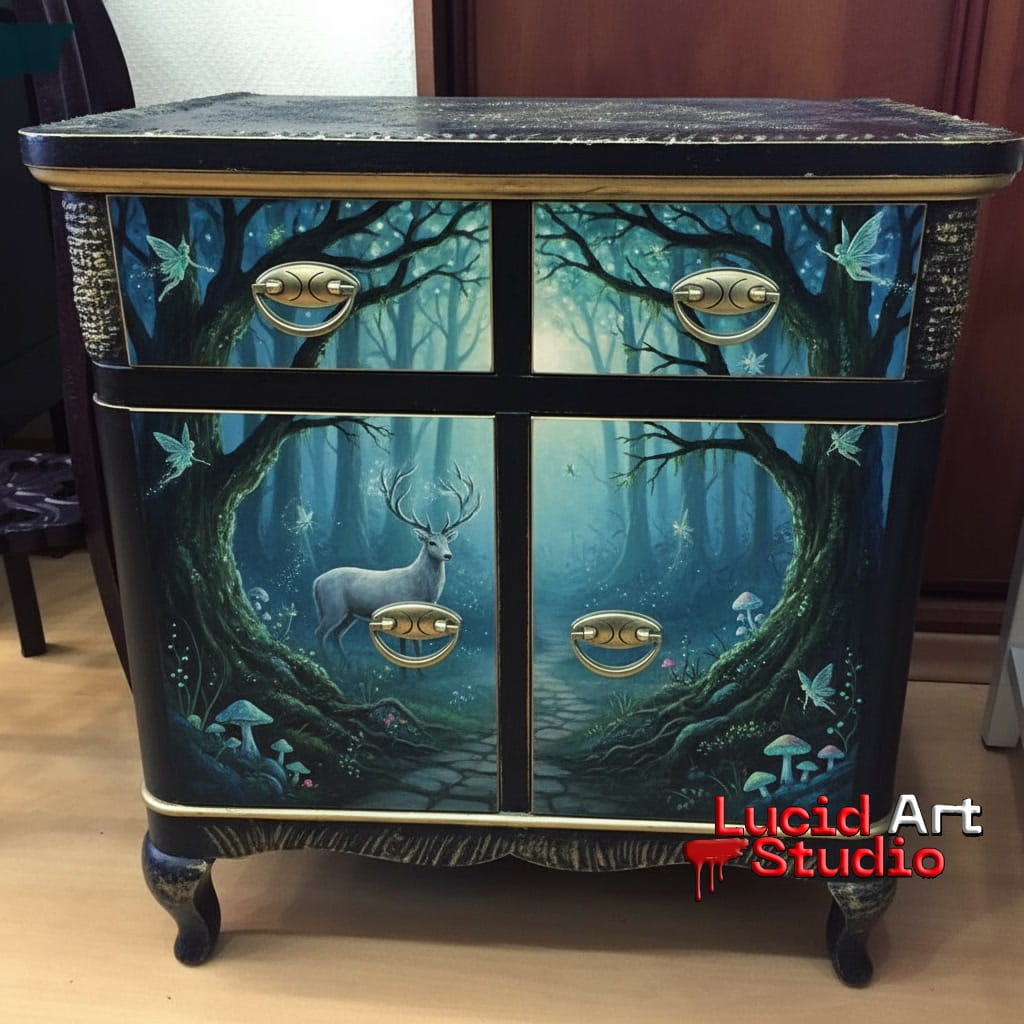
Pricing for painting furniture and appliances
Painting on furniture, doors, and appliances is typically more expensive than wall work. This is due to the nature of the surfaces, which require additional preparation before applying the design.
Before starting the work, the following steps are carried out:
- surface preparation (sanding)
- cleaning and degreasing
- primer application
- then the painting itself
Project timeline
The duration of the work is calculated individually and depends on several factors:
- level of project complexity
- total surface area
- number of artists involved in the project
Small and simple projects can be completed within a single day, while larger and more detailed works require more time.
On average, a project takes between 1 and 7 days to complete, depending on the conditions and scope of work.